UK companies must maintain an appropriate physical registered office address. The address must match the company's registration jurisdiction. Company documents must reach someone acting for the company. Senders must have a way to obtain delivery acknowledgement. Companies House publishes the registered office on its public register. A PO Box cannot serve as the registered office. These registered office requirements apply when directors live overseas too. Directors can use suitable UK homes or address-service provider premises. The premises must fall within the company's registration jurisdiction.
Address problems also affect company restoration applications. An expired address contract can leave the previous office unavailable. Check permission and delivery arrangements before preparing restoration documents. This guide explains address suitability, AD01 changes, default addresses, and enforcement.
An appropriate registered office lets company representatives receive documents. Senders must have a way to obtain delivery acknowledgement. Section 86 of the Companies Act 2006 establishes that standard. The rules concern practical delivery, rather than the building's appearance.
In ordinary circumstances, documents must reach someone acting for the company. Senders must also have a way to obtain delivery acknowledgement. These requirements cover documents arriving by hand or post. A provider can receive documents for your company. However, purchasing an address does not automatically establish compliance. Check how the provider receives, records, and forwards company correspondence.
Yes, the registered office must match the company's registration jurisdiction. Check the company record before choosing premises. England and Wales form one registration jurisdiction, with a Welsh-company exception.
AD01 does not transfer a Scottish company into England and Wales. A Scottish company cannot use London premises as its registered office. Choose the location before comparing provider prices.
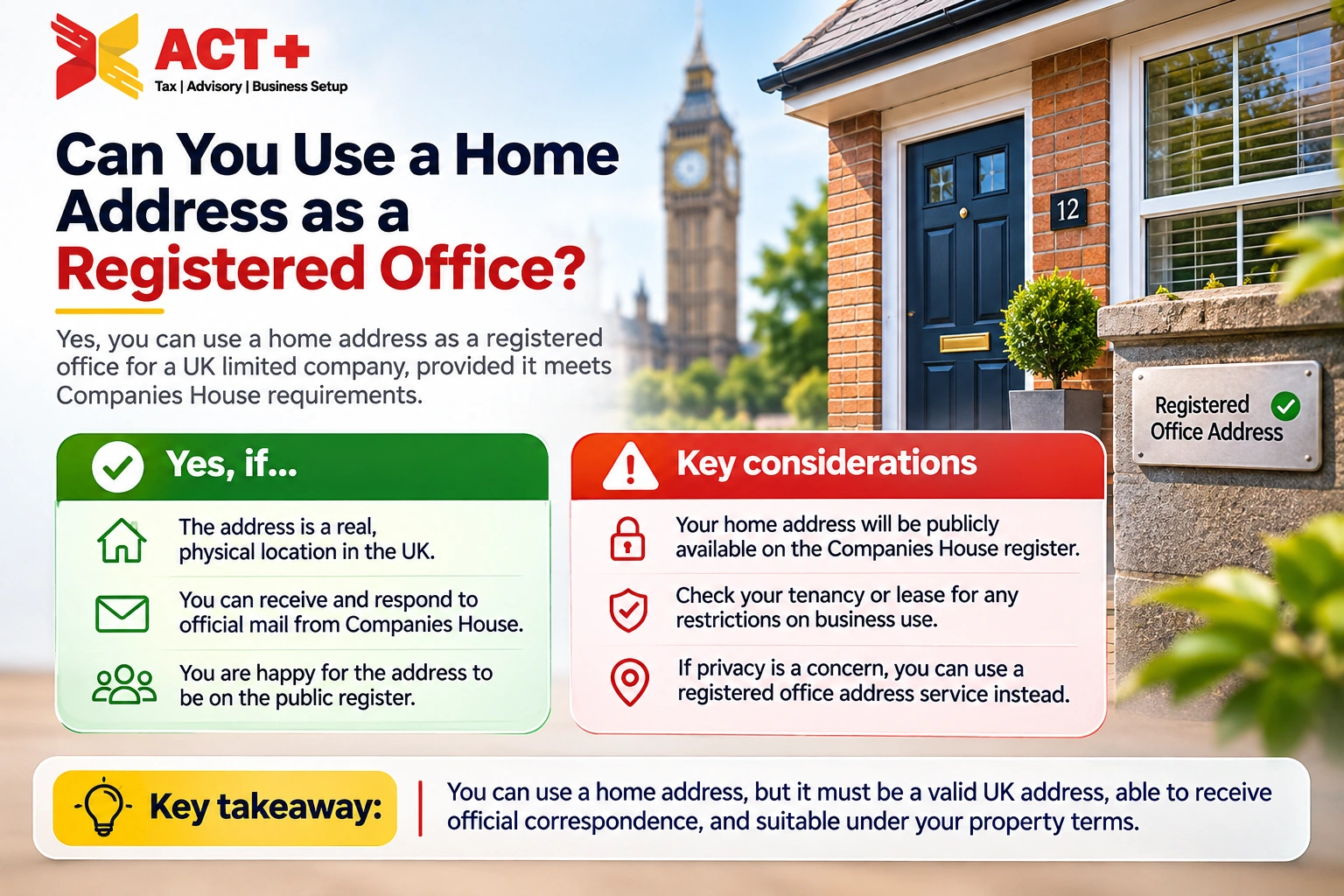
Yes, you can use a home address if it meets the registered office requirements. You must also have permission to use the property. Companies House publishes that address on the public register. Consider who will handle deliveries during holidays or extended travel. A suitable address needs reliable arrangements beyond the incorporation date. Ask another authorized person to manage correspondence where necessary.
If you rent, review your tenancy conditions before registering the address. Ask the landlord about any restrictions affecting your proposed use. Company registration does not override your property agreement. For example, a home-based consultant might receive company correspondence personally. An overseas director might instead appoint a UK address provider. Both arrangements need suitable delivery and acknowledgement procedures.
No, an address change does not automatically erase historical filings. Review Companies House privacy guidance before using your home publicly. Personal information removal follows a separate process where eligibility permits.
The registered office receives company correspondence; service addresses receive director correspondence. Directors also provide their usual residential addresses separately. These addresses serve different purposes, even when they share premises.
Changing the registered office does not automatically update every director's address. Review each affected record before submitting separate changes. Avoid copying a home address into public fields unintentionally. Keep director-address procedures separate from the company's AD01 filing. That distinction prevents an accepted office change from leaving personal records outdated.
Notify Companies House online, or use paper AD01 where required. Tell Companies House within fourteen days of the change. The address changes officially when Companies House registers the notice.
Follow these steps:
Check your company's registration jurisdiction.
Obtain permission for the new premises.
Confirm mail handling and delivery acknowledgement arrangements.
Gather the company name, number, and new address.
Select the correct online or paper filing route.
Confirm that the address meets the appropriate address standard.
Complete the required authentication.
Submit the notice and check the company record.
The online service requires your company authentication code. If you cannot access the registered office, request alternative code delivery. Official guidance offers delivery to your home address.
Use paper AD01 when applying to restore a company. Companies with default addresses or liquidation cases also require paper filing. Unregistered companies fall within the paper-form guidance too. Download the current paper AD01.
Follow the current form's authentication instructions. AD01 version 7.0 requests a printed name without a signature. Do not assume older form instructions remain current.
Companies House notifies HMRC about the registered office change. Documents can still reach the previous office through valid legal service. That arrangement lasts fourteen days after registration of the change.
Arrange temporary cooperation with the former provider where possible. Separately update banks, insurers and other business contacts. Companies House notification does not update every organisation's customer records.
Companies House does not charge for changing the registered office. Providers may charge separately for premises, mail forwarding or filing assistance. Ask whether quotations include VAT, renewals and document handling.
The default address is an address that Companies House maintains. The registrar can substitute it after finding an inappropriate registered office. Its location depends on the company's jurisdiction. The default address does not provide your chosen commercial mail service. Treat the change as an enforcement issue requiring prompt attention. Read the registrar's notice before arranging replacement premises.
Without an appeal, provide replacement details within twenty-eight days. Count from the change to the default address. Submit a new address notice with supporting evidence. Evidence must establish ownership or permission to use the premises. Appeal procedures can affect the relevant timetable. Do not confuse this period with ordinary AD01 reporting deadlines. Keep the notice date and response deadline beside your case documents.
Address authorisation establishes permission; address evidence supports the claimed entitlement. A familiar postcode alone establishes neither. Ask who controls the property and who authorises company registration.For a provider arrangement, keep the written service agreement. Check that it covers registered office use for your company. Confirm the start date, renewal arrangements, and cancellation provisions.
When leaving a default address, supply evidence showing entitlement. Companies House assesses whether that evidence supports the replacement address. Follow the registrar's specific evidence instructions. Avoid confusing two different applications. A company files AD01 to change its office. Someone challenging an unauthorised address use can apply through RP07. Each procedure has its own purpose and evidence requirements.
Overseas directors must maintain a compliant office for their UK company. Directors need not live in the UK themselves. Their company still needs a UK registered office. A foreign home does not replace that UK company address. Choose UK premises within the correct registration jurisdiction. Ask the provider how directors abroad will receive urgent correspondence. Confirm who monitors messages when local working hours differ. Keep access to the forwarding account and provider contact details. Avoid relying entirely on an intermediary's personal inbox.
Companies must maintain an appropriate registered email address alongside their office. Companies House emails must reach someone acting for the company. Section 88A establishes this electronic correspondence requirement.
Companies House does not publish the registered email address. Directors must ensure someone reads incoming messages. Update the registered email separately from the physical office. A practical arrangement uses a monitored company mailbox. Assign responsibility when employees or advisers leave. Check forwarding rules and recovery access before closing old accounts.
Yes, failure to maintain an appropriate registered office can trigger strike-off. Companies House can first replace the address with its default address. Continued failure to provide a suitable replacement can lead to dissolution. The default-address process includes specific notices and deadlines. It does not mean one returned letter automatically dissolves a company. Read the legal grounds and dates in the registrar's correspondence.
Without an appeal, provide replacement details within twenty-eight days. Count from the change to the default address. The registrar may then publish a Gazette strike-off notice. That procedure provides a further two-month notice period. Submit the required address evidence or a valid objection promptly. Filing unrelated accounts does not correct an inappropriate registered office. Address the actual reason for enforcement.
Updating the Registered Office After Company Restoration
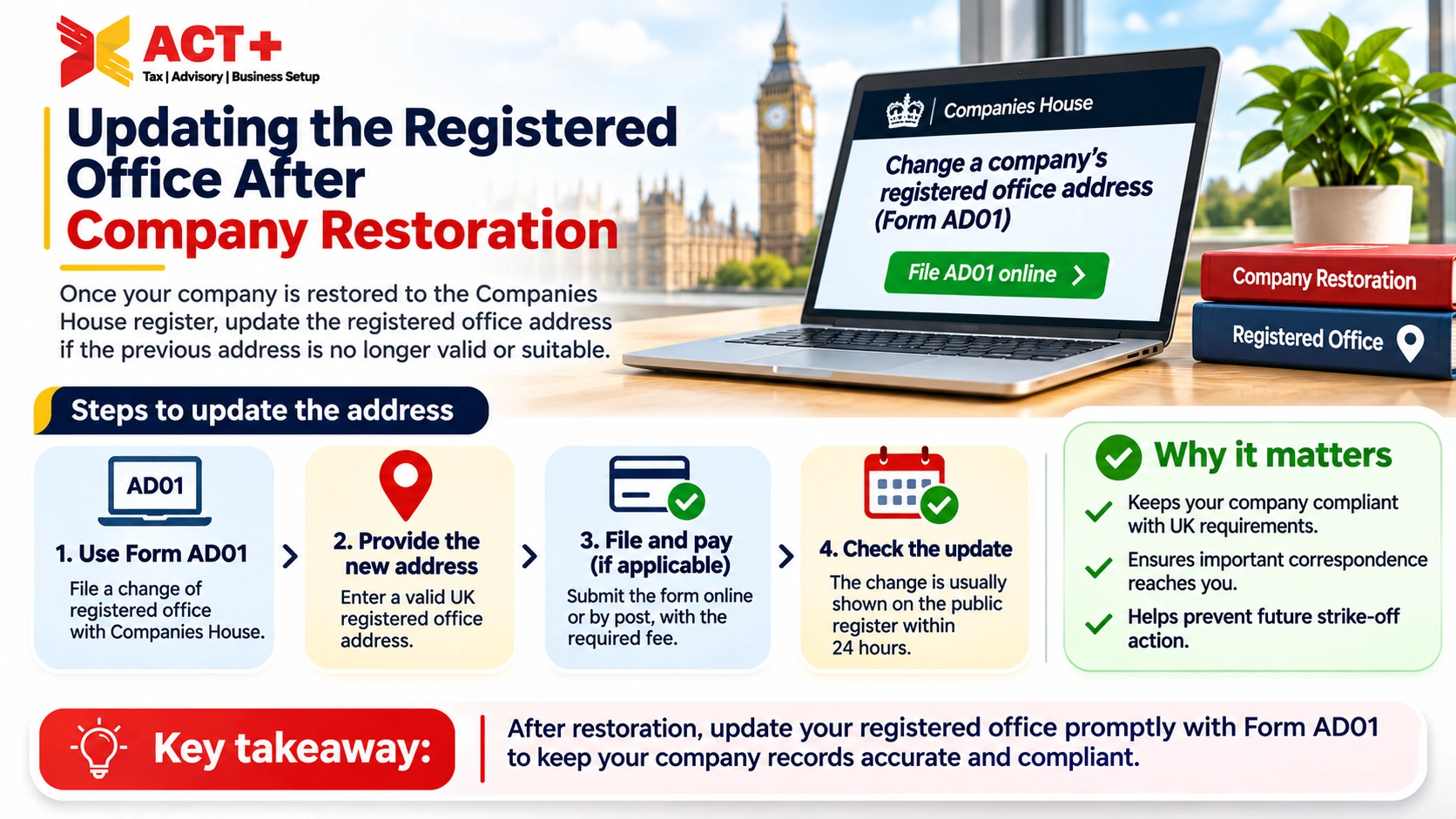
Check the registered office during restoration preparation and after registration. If the previous address is unavailable, arrange a replacement beforehand. Use the paper AD01 route during the restoration application.
Some restorations specifically require a new address notice and entitlement evidence. This applies after strike-off under regulation 22's address-rectification procedure. For example, an expired provider contract may leave an address unusable. Ask the former provider whether permission still exists. If permission has ended, secure another suitable address before filing.After restoration, check the accepted address on the company record. Confirm that the provider has activated correspondence handling. Review the registered email and relevant director records separately.
Company documents must reach someone acting on the company’s behalf. Senders must have a way to obtain delivery acknowledgement. The address must also meet your company’s jurisdiction requirements.
Yes, you can use a suitable UK home address. You must have permission and reliable document-delivery arrangements. The address must fall within your company’s registration jurisdiction. Companies House publishes it on the public register.
No, you must provide an appropriate replacement address. Follow the deadline in your Companies House notice. Include evidence showing your entitlement to use the replacement premises.
Yes, an unsuitable registered office can lead to compulsory strike-off. Companies House can pursue enforcement if you fail to correct it. Register an appropriate replacement and respond to official notices.
Yes, you can use the same premises for both purposes. Your company receives correspondence at its registered office. You receive director correspondence at your service address. Confirm that your provider permits both uses.
Notify Companies House online or use paper AD01 where required. Restoration applications, default-address cases, and liquidations require paper AD01. Choose an appropriate address within your company’s registration jurisdiction. The change takes effect when Companies House registers the notice.
Review your registered office against location, delivery, and acknowledgement requirements. Confirm written permission and active mail handling. Check the registered email separately and assign monitoring responsibility.For restoration, resolve an unavailable office before assembling the application. Use the correct AD01 route and supporting evidence. After Companies House accepts the change, review the public record.
Send your company number to info@companyrestorationuk.com for a restoration review. Include any address notice or expired provider agreement. We can then assess the address issue alongside outstanding filings.
Speak to a restoration specialist today — most eligible companies are back on the register in 4–6 weeks.
Start restorationSend the basics. A case manager checks the register and comes back with the route, the documents and the official costs.
Start with how the company was dissolved.
These answers help estimate work and official costs.
We use these details only to review your case and reply to you.
When you press Send My Details for a Free Review, your answers and contact details are sent to the Xact+ restoration team for a free case review. Read the privacy policy.
This is an indication from your answers, not a formal assessment.


Leave a comment