Compulsory strike-off is the process through which the Registrar of Companies removes a UK company from the register without its directors applying for voluntary dissolution. The Registrar must follow the applicable statutory procedure and publish the required Gazette notices.
Overdue accounts, missing confirmation statements, and unanswered Companies House letters can prompt inquiries into whether a company still operates. A proposal is not dissolution. Directors can respond before the Registrar completes removal. This explains the legal grounds, notice periods, objections, director duties, company assets, and restoration options.
Compulsory strike-off means Companies House has begun proceedings to remove a company under a statutory power. Under Section 1000 of the Companies Act 2006, the Registrar may act where there is reasonable cause to believe the company is not carrying on business or operating. Not every compulsory removal uses section 1000. Different powers have different conditions and deadlines.
Section 1001 concerns companies being wound up. It requires both the specified registrar's belief and six consecutive months of missing liquidator returns. It is not the ordinary route for overdue annual accounts.
Directors initiate a voluntary strike-off with form DS01, subject to eligibility rules. Companies House initiates compulsory strike-offs under its own statutory powers. Neither process is an alternative to settling creditor claims or dealing with insolvency properly.
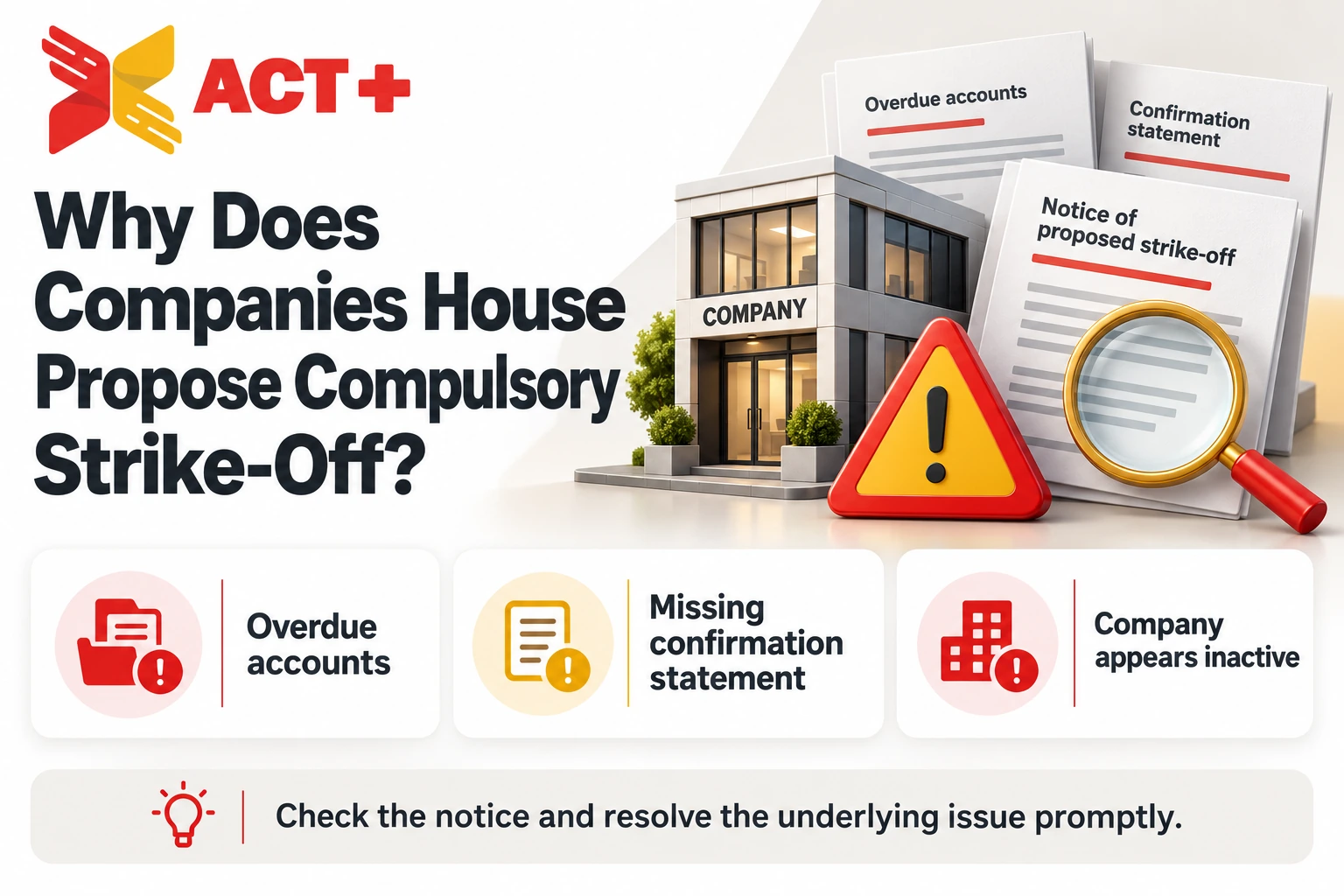
Missing statutory filings and unanswered enquiries can indicate that a company has stopped operating. The Registrar must still have the legal grounds relevant to the procedure used.
Most limited companies must submit annual accounts, including dormant companies. Persistent non-filing may cause Companies House to question whether the company operates. Late-filing penalties are separate from any strike-off action.
Companies must file a confirmation statement even when their registered information is unchanged. Missing statements may contribute to Registrar enquiries. Directors should check each outstanding confirmation date and applicable identity-verification requirements.
Companies House may move an inappropriate address to its default address. The company must then provide a compliant replacement within the prescribed period. Failure can lead to action under the special registered office rules.
The first Gazette notice publicly announces the Registrar's proposal to strike a company off. It gives the company and interested parties an opportunity to show why removal should not proceed.
A first notice does not dissolve the company. The company remains on the register until the Registrar publishes a final strike-off notice.
It means proceedings have started, but dissolution has not occurred. Check the company's status, filing history, and notices on the Companies House register. Identify the legal provision and the deadline stated in the Gazette notice.
Section 1000 sets out enquiries before the first Gazette notice. The statutory stages are:
Initial enquiry: The registrar sends a communication asking whether the company operates.
First response period: If no reply arrives within 14 days, the Registrar may proceed to a second inquiry.
Second enquiry: The Registrar sends a further communication within 14 days after that initial period.
Further response period: If no answer arrives within another 14 days, the Registrar may publish the proposed strike-off notice.
First Gazette notice: At least two months must pass before ordinary removal can proceed.
Final Gazette notice: If the Registrar strikes off the company, publication of the final notice dissolves it.
These are statutory stages, not a guaranteed total completion time. A valid objection or evidence that the company operates may stop the process.
Look for a discontinuance entry in the Companies House filing history. Filing overdue accounts alone does not prove the registrar has formally discontinued strike-off. Contact Companies House if the status remains unclear after accepted filings.
Ordinary section 1000 strike-off requires at least two months after the first Gazette notice, in addition to the enquiry stages. The process can take longer if Companies House receives representations or objections.
Section 1002A addresses certain companies registered or restored on a materially false basis. The registrar publishes a notice allowing 28 days for objections. Do not apply that deadline automatically to ordinary section 1000 cases.
Yes. A creditor or other interested party can object after the first Gazette notice and before dissolution. The objection must have a genuine basis, supported by evidence such as unpaid invoices, a contract or legal proceedings.
The online service asks for the company number and documents showing the company's full name and the reason for objection. Supporting documents must be less than six months old and under 4 MB.
A successful objection normally prevents strike-off for another six months. Companies House can consider an extension when the creditor demonstrates progress, such as issuing court proceedings. Repeating an unpaid invoice without further action is unlikely to support an extension. Tell Companies House if the debt is resolved or more time is required before the objection expires.
Companies House has announced that, from 1 December 2026, objections must normally be submitted through its online service rather than email. People unable to use the service because of a disability or health condition should contact Companies House for assistance.The current service explains available assisted routes. Submit any objection before the proposed dissolution deadline.
Yes. HMRC can object when unresolved tax matters justify preventing removal. Examples include outstanding corporation tax, VAT or PAYE liabilities and ongoing enquiries. A successful HMRC objection can delay dissolution. Strike-off does not automatically extinguish taxes or excuse directors from supplying legally required records.
Under section 1012 of the Companies Act 2006, a dissolved company's property and rights generally vest as bona vacantia in the Crown or relevant Duchy. Property held by the company on trust for someone else is excluded from that vesting rule.
Former directors do not automatically own the company's remaining funds. A restored company can pursue repayment through the bank or the relevant Crown process, depending on who holds the money.
See our Bona Vacantia guide for the separate asset-recovery procedures.
A proposal does not remove directors' existing obligations while the company remains registered. Directors should preserve company records, deal appropriately with creditors and avoid unauthorized transfers of company property.
Review tax returns, unresolved liabilities, contracts and the company's solvency position. Personal guarantees and liabilities arising from misconduct do not disappear simply because Companies House dissolves the company.
Directors can usually stop a proposed strike-off by addressing the reason Companies House gives in its notice. This may involve filing overdue accounts, submitting a confirmation statement, or providing a compliant registered office address. Respond promptly and provide any requested evidence. The table below explains the practical response for each cause. Afterwards, check that Companies House has discontinued the action.
The immediate response depends on the registrar's grounds:
After correcting the problem, check for formal discontinuance. For complex cases, obtain advice rather than attempting an unsupported objection merely to gain time.
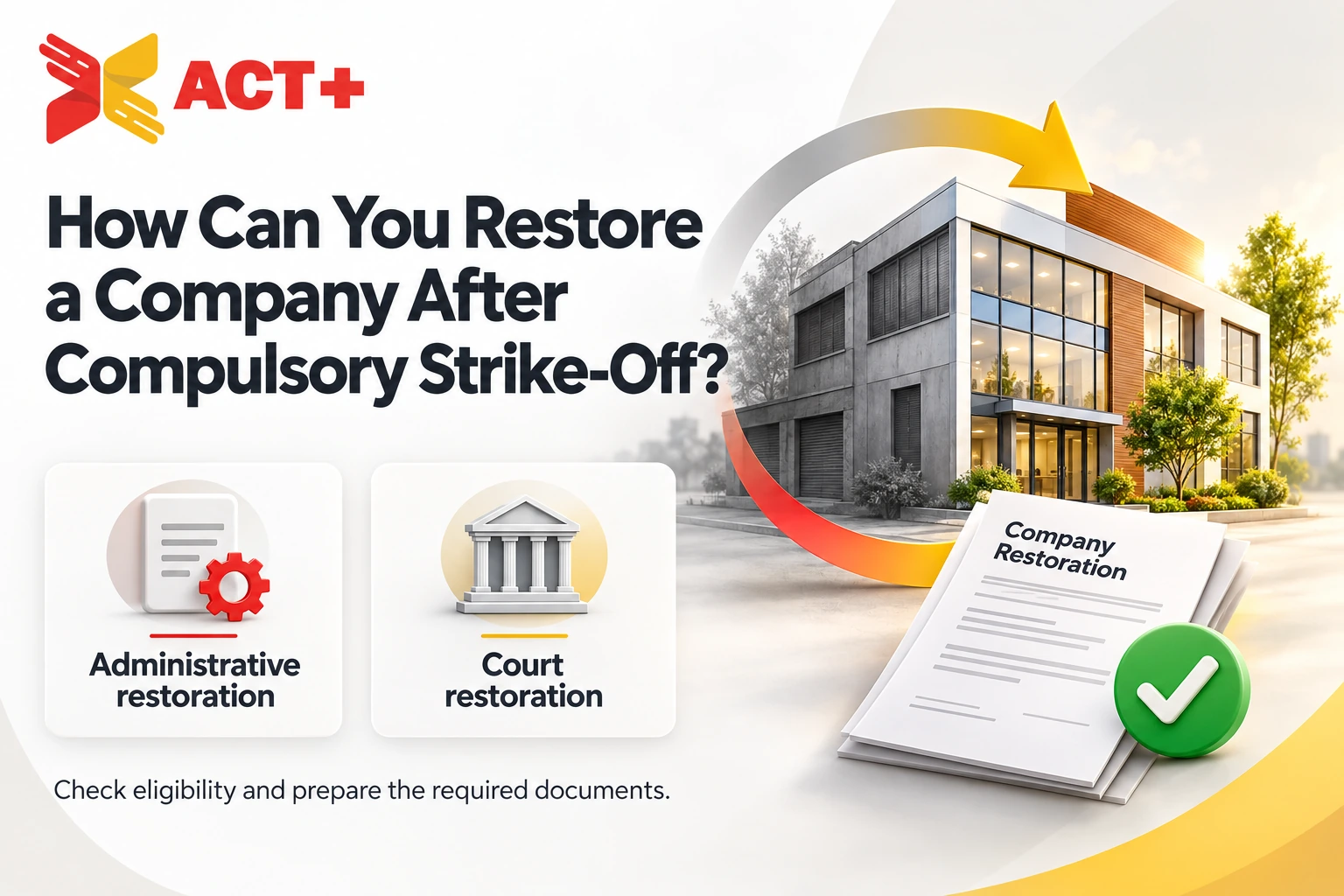
Eligible former directors or members may apply for administrative restoration after qualifying Registrar strike-offs. Ordinary section 1000 and 1001 cases generally require the company to have been carrying on business or operating when struck off. The normal application window is six years from dissolution.
Administrative restoration uses form RT01, outstanding statutory filings, applicable penalties and any required Crown consent. Section 1002A and registered-office rectification cases have specific additional conditions. Companies voluntarily dissolved using DS01 generally require court restoration.
Example: RT01 (£341), an applicable waiver (£64) and one chargeable paper CS01 (£110) total £515 in official charges. This excludes additional filing periods, penalties, postage and professional work. The waiver requirement and relevant Crown authority depend on the company's circumstances.
For more detail, read the RT01 administrative restoration guide.
No. A first Gazette notice announces a proposed strike-off. The company remains registered until dissolution. Dissolution occurs when the Registrar strikes the company off the register and publishes the final Gazette notice.
Yes. Trading does not prevent compulsory strike-off where legal grounds exist. Directors should respond to Companies House, provide evidence of business activity and address any outstanding filing requirements.
No. Filing overdue accounts may resolve the reason for strike-off, but it does not confirm cancellation. Directors should check that Companies House has accepted the accounts and formally discontinued the proceedings.
Yes. HMRC can object to a proposed strike-off because of outstanding tax or unresolved tax matters. Directors should address missing returns and unpaid liabilities. An objection can delay strike-off, but it does not settle the company’s tax position.
Yes. An eligible creditor can apply to the court to restore a dissolved company, subject to legal requirements and time limits. Being owed money does not, by itself, make a creditor eligible for administrative restoration using form RT01.
Yes. Dormant companies must still file statutory accounts and confirmation statements. Companies House may begin strike-off proceedings if a company fails to meet its obligations. Directors should address the reason stated in the notice.
Company Restoration UK can review a company's dissolution history, outstanding Companies House filings, and potential restoration route. Send the company number, Gazette notice date, and latest Companies House correspondence for an initial review.

Specialists at Xact+ Accountants helping UK directors reinstate struck-off companies, meet Companies House and HMRC obligations, and recover frozen funds.
Speak to a restoration specialist today — most eligible companies are back on the register in 4–6 weeks.
Start restorationSend the basics. A case manager checks the register and comes back with the route, the documents and the official costs.
Start with how the company was dissolved.
These answers help estimate work and official costs.
We use these details only to prepare your email summary.
This is an indication from your answers, not a formal assessment.




Leave a comment