Company restoration returns a dissolved UK company to the Companies House register and restores its legal existence. The correct route depends on the dissolution method, applicant, and company history. Two main routes exist: administrative restoration and court restoration. Each route has different eligibility rules, documents, costs, and procedures.
A company restoration UK case can also involve overdue accounts, confirmation statements, penalties, and company assets. Bona Vacantia can apply when assets pass to the Crown after dissolution. This guide explains the main rules for former directors, shareholders, creditors, and advisers.
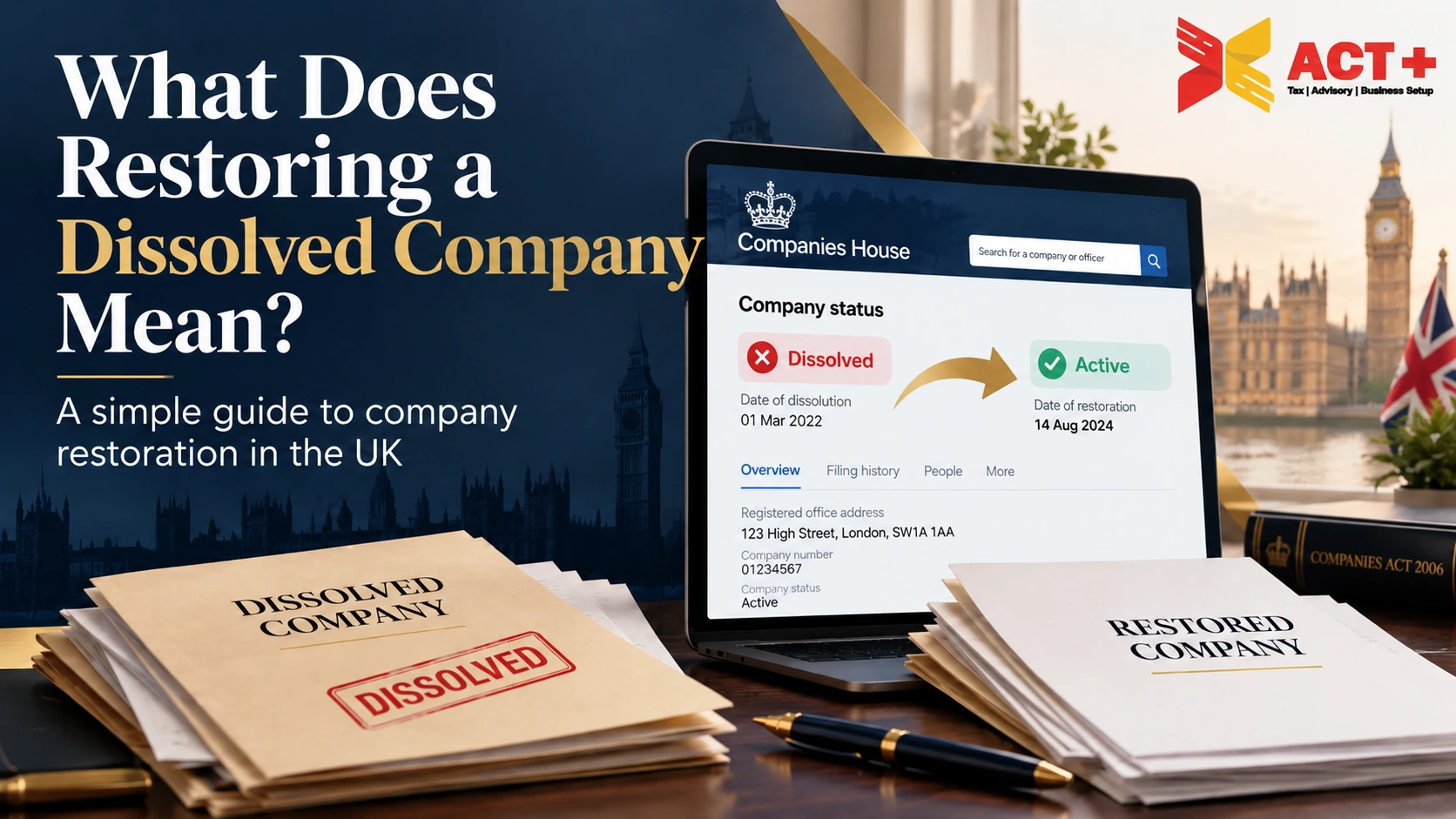
Restoring a dissolved company means returning it to the Companies House register as a legally existing company. A company stops existing as a legal entity when dissolution takes effect. Its property and rights can pass to the Crown as Bona Vacantia. Restoration reverses the effect of dissolution. The Companies Act 2006 generally treats the restored company as continuing without interruption.
Restoration can help a company resume trading, recover assets, deal with liabilities, or resolve unfinished legal matters. A former director may restore a company to continue business. A shareholder may need access to company funds. A creditor may need restoration to pursue a debt.The reason for restoration often helps identify the correct route.
A dissolved company can usually be restored when it meets the conditions for administrative restoration or court restoration. Administrative restoration applies only in qualifying circumstances. A former director or member can normally apply where the Registrar struck the company off under sections 1000 or 1001. The company must have carried on business or operated when Companies House struck it off.
Administrative restoration can also apply to certain section 1002A strike-offs. It can cover some registered office address rectification strike-offs under regulation 22. Additional evidence applies in these cases. Administrative restoration does not apply where directors voluntarily applied to strike the company off. Court restoration covers a wider range of situations. These include voluntary strike-off and cases where administrative restoration does not apply. The dissolution history should therefore be checked before preparing an application.
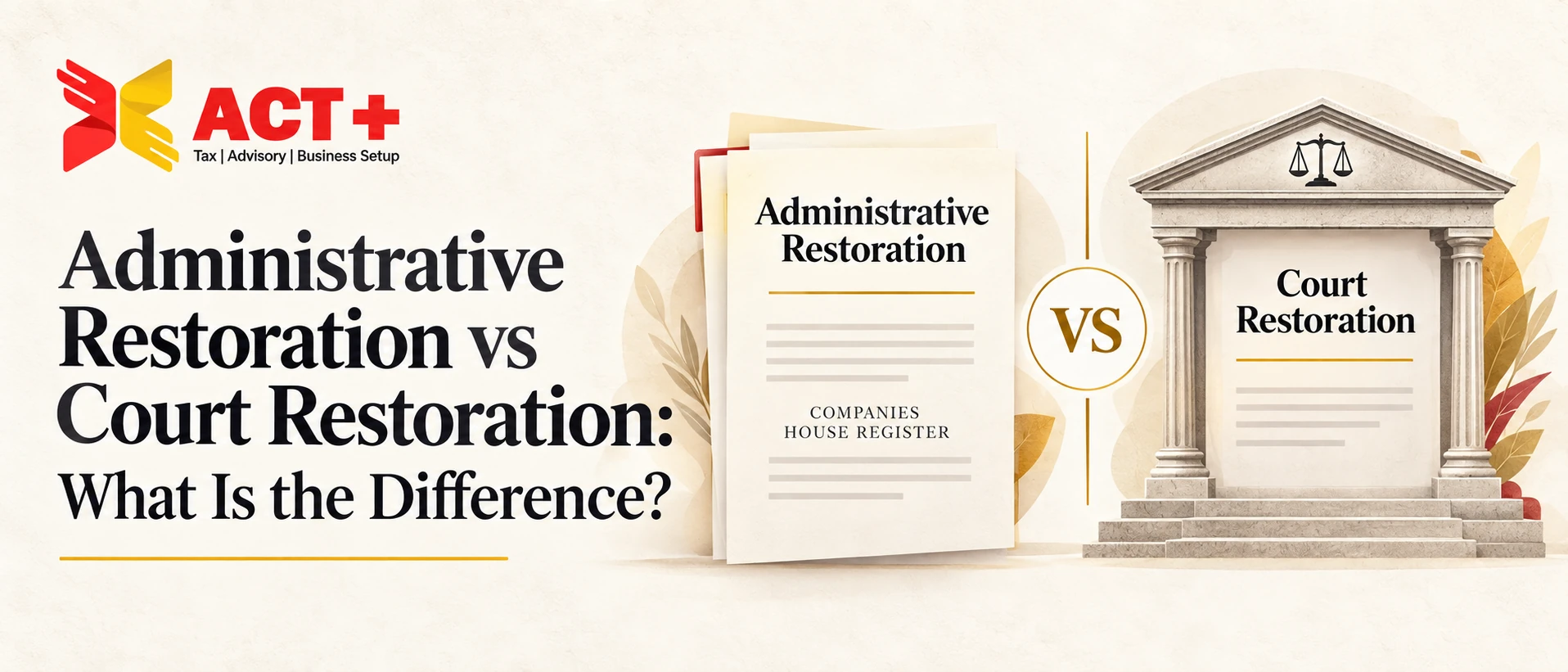
Administrative restoration goes directly through Companies House, while court restoration requires a court order. Administrative restoration usually suits a company that Companies House struck off rather than one voluntarily dissolved by its directors.A qualifying former director or member completes form RT01. Outstanding company documents must also be dealt with.These can include annual accounts, confirmation statements, filing fees, and outstanding late filing penalties. A Bona Vacantia waiver can also apply where company assets passed to the Crown. You can read the detailed administrative restoration guide for the step-by-step RT01 process. Court restoration follows a different procedure.
In England and Wales, an applicant normally uses form N208. The application also requires supporting evidence and a witness statement. A simple example shows the difference. A former director whose trading company was compulsorily struck off two years ago may qualify for administrative restoration. A company voluntarily struck off through DS01 normally requires court restoration. A creditor seeking restoration to pursue a company debt would normally use the court route. Scotland and Northern Ireland have different court procedures.
The eligible applicant depends on whether the company uses administrative or court restoration. For administrative restoration, the applicant must have been a director or member when the company was struck off or dissolved. Court restoration allows a wider group of applicants. Former directors, members, creditors, and liquidators can generally apply.
Other eligible applicants can include people with contractual relationships or potential legal claims against the company. A person with an interest in property involving the company can also qualify. Pension fund managers or trustees can apply in relevant circumstances. The court can also consider another person with a sufficient interest in the matter. This wider eligibility makes court restoration particularly relevant to creditors and other interested parties.
Administrative restoration must normally be requested within six years of the company's dissolution. Court restoration also generally has a six-year limit. However, no time limit applies to a court restoration application relating to a personal injury claim. The personal injury exception does not extend the administrative restoration limit. A further rule applies when Companies House refuses administrative restoration. The applicant can apply to the court within 28 days of the refusal. This can apply even after the normal restoration period expires. The dissolution date should therefore be checked before preparing documents or paying application costs.
Company restoration documents depend on the restoration route and the company's filing history. An administrative restoration application normally requires form RT01. Companies House also requires the documents needed to bring the company record up to date.These can include annual accounts and confirmation statements. Relevant filing fees and outstanding penalties must also be addressed.
A Bona Vacantia waiver letter can apply where the dissolved company held assets. You can read the detailed Bona Vacantia guide for more information about dissolved company assets and frozen funds.Court restoration requires a different document pack.
In England and Wales, this normally includes form N208 and a supporting witness statement. The evidence can cover directors, members, trading activity, share capital, dissolution, registered office, and outstanding filings. Missing information can delay either restoration route.Checking the Companies House record first helps identify the required documents.
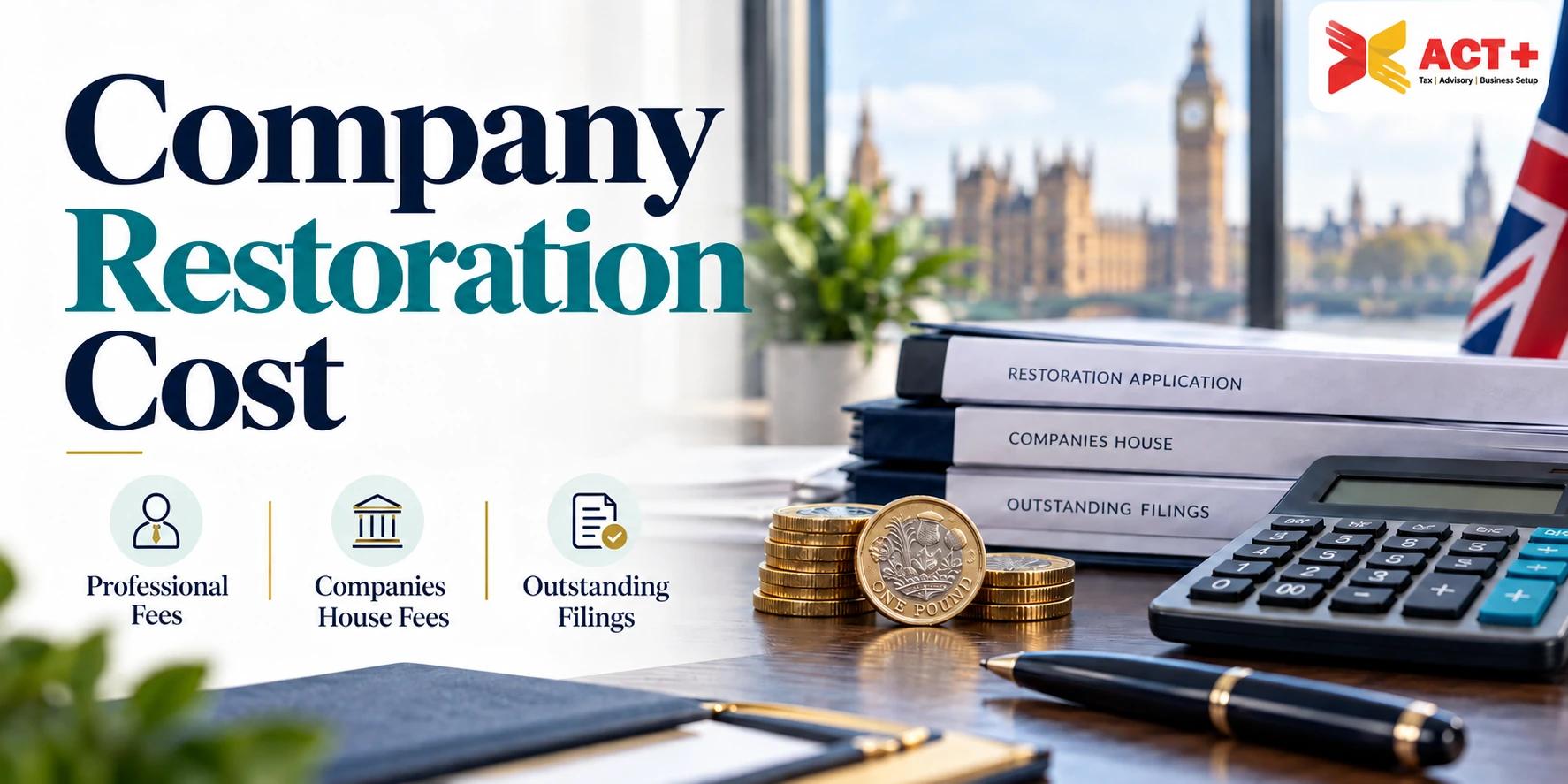
Company restoration costs depend on the route, outstanding filings, penalties, assets, and professional work required. As of September 2026, Companies House charges £341 for an administrative restoration application using RT01.The Government Legal Department currently charges £64 for a Bona Vacantia waiver application in applicable cases. Different arrangements can apply in Scotland, Northern Ireland, and some duchy areas.
In England and Wales, the current court fee for a court restoration claim is £326.Court restoration can involve further costs. These can include legal work, Registrar costs, crown costs, and professional fees.Outstanding Companies House penalties can also increase the total.Accounts overdue before dissolution can still attract late filing penalties.However, a company does not pay late filing penalties simply because an accounts deadline fell during the dissolved period.The total restoration cost therefore depends on the company's actual filing and asset history.
A straightforward administrative restoration can take around four to six weeks in practice, but this is an estimate, not a Companies House guarantee. The timeframe depends on how complete the company records are.Missing accounts, confirmation statements, penalties, or a Bona Vacantia waiver can extend the process. Companies House can also reject an incomplete RT01 application.
Court restoration usually takes longer because it involves court procedures, supporting evidence, and service requirements. Court availability also affects the timetable. A company with several overdue accounting periods may take longer than a simple restoration case. Preparing missing records before submission can reduce avoidable delays.
A restored company generally continues in law as if Companies House had never struck it off. This means the company regains its legal existence and continuity. Restoration can also affect company property. When a company dissolves, qualifying company assets can pass to the Crown as Bona Vacantia. These assets can include money, property, shares, and intellectual property.
Restoration can reopen the route to recovering company property or frozen funds. Further steps may still be required after restoration. The court can also make directions to place the company and other persons into their pre-dissolution position. An application asking the court to restore those positions must normally be made within three years after the company is restored. Restoration does not automatically cancel debts, penalties, tax obligations, or unfinished compliance work.
After restoration, directors should bring the company's legal, accounting, tax, banking, and operational position fully up to date. First, confirm that Companies House shows the company as active. Review the registered office, directors, people with significant control, accounting records, and confirmation statement position. Future annual accounts and confirmation statements must then remain up to date.HMRC records should also be reviewed separately. Companies House restoration does not automatically complete outstanding corporation tax work. Outstanding corporation tax returns, liabilities, or HMRC correspondence may still require action.
Company assets also need attention. Contact the bank or payment provider where funds were frozen. Where assets reached the Crown, follow the correct recovery procedure after restoration. Directors planning to resume trading should also review contracts, insurance, payroll, VAT, licenses, and supplier arrangements. Restoration returns the company to the register. Ongoing compliance helps keep it there.
Restoring a dissolved company returns it to the Companies House register and restores its legal existence. The law generally treats the company as continuing without interruption.
A company can usually be restored when it qualifies for administrative restoration or court restoration. Most applications fall within a six-year restoration period.
Former directors and members can apply in qualifying administrative restoration cases. Court restoration also allows creditors and other people with a qualifying interest to apply.
Administrative restoration currently costs £341 before other filing costs, penalties, or professional fees. A qualifying waiver currently costs £64. Court restoration has separate court and legal costs.
A straightforward administrative restoration can take around four to six weeks in practice. This timeframe remains an estimate and depends on the company's records and circumstances.
Restoration generally treats the company as if it had continued to exist throughout the dissolved period. Company assets and unfinished obligations can then require further action. Company restoration UK cases differ according to dissolution history, applicant, assets, and outstanding filings. Checking those points first helps identify the correct restoration route, documents, costs, and post-restoration work.

Specialists at Xact+ Accountants helping UK directors reinstate struck-off companies, meet Companies House and HMRC obligations, and recover frozen funds.
Speak to a restoration specialist today — most eligible companies are back on the register in 4–6 weeks.
Start restorationSend the basics. A case manager checks the register and comes back with the route, the documents and the official costs.
Start with how the company was dissolved.
These answers help estimate work and official costs.
We use these details only to prepare your email summary.
This is an indication from your answers, not a formal assessment.

Leave a comment