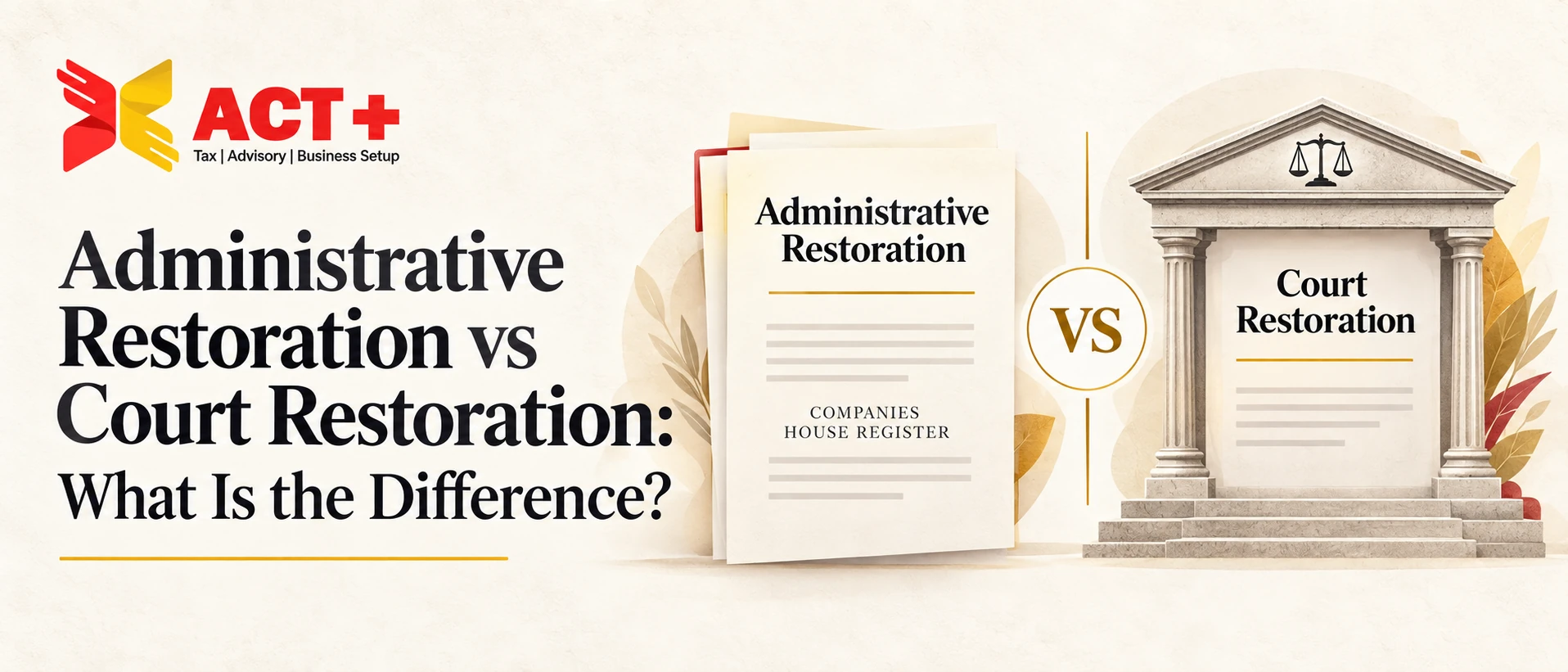
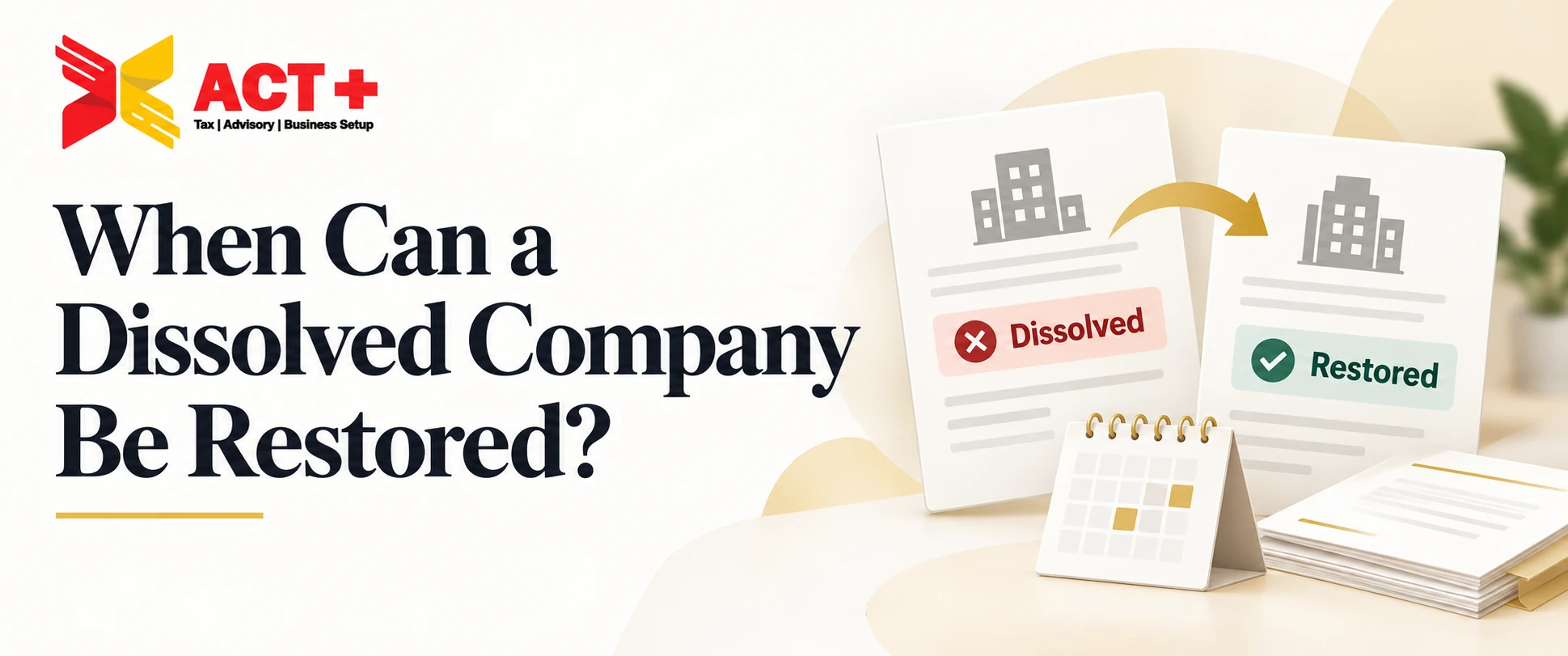
Administrative restoration and court restoration are two legal routes for returning a dissolved UK company to the Companies House register. Administrative restoration allows an eligible applicant to deal directly with the Registrar of Companies. Court restoration requires an order from the relevant court. The correct route depends on why the company was dissolved, who is applying, and whether the administrative restoration conditions are satisfied. A qualifying former director or member may use administrative restoration after certain registrar strike-offs. A voluntarily dissolved company normally needs the court route. Creditors and some other interested parties also generally rely on court restoration. These differences help identify the correct company restoration route before preparing documents or paying fees.
Administrative restoration is a direct Companies House route for restoring certain companies removed by the Registrar of Companies. It does not require the applicant to obtain a court order first. The procedure sits within Part 31 of the Companies Act 2006. The application is made to the Registrar using Form RT01. Administrative restoration is only available when the relevant legal conditions are satisfied.
For the usual Registrar strike-off route, the company must have been struck off by the Registrar. It must also have been carrying on business or operating when it was removed. The ordinary application must normally reach Companies House within six years of dissolution. Current restoration rules also cover certain less common Registrar strike-off circumstances. These cases can require additional supporting evidence. The exact reason for dissolution therefore matters before starting an administrative restoration UK application.
A former director or member can use administrative restoration when both the applicant and company meet the relevant conditions. The route commonly applies where Companies House struck the company off rather than the directors applying for voluntary dissolution. Companies House checks the circumstances behind the dissolution.
For the ordinary route, three points are particularly important:
the applicant's relationship with the company;
the reason for strike-off;
whether the company was operating when removed.
An applicant cannot use administrative restoration merely because they previously had an interest in the company. The company itself must qualify for the route.
Administrative restoration is unavailable when the company or applicant falls outside the statutory conditions. Voluntary strike-off is the clearest example. Where the directors applied to strike the company off voluntarily, Companies House directs restoration through a court order instead. The administrative route can also fail where the applicant is not an eligible former director or member. Court restoration may then need consideration. Certain refused administrative applications can also move towards court proceedings. This is why the dissolution record should be reviewed before preparing an RT01 application.
Court restoration returns a dissolved company to the register after the court makes a restoration order. The applicant starts court proceedings rather than applying only to Companies House. This route can deal with circumstances that fall outside ordinary administrative restoration.
In England and Wales, a claimant commonly uses Form N208 when applying for restoration by court order. The court considers the facts behind the application. If it grants restoration, the relevant order must reach the Registrar before Companies House restores the company. Scotland and Northern Ireland use their own court procedures. Court restoration therefore has an additional legal stage compared with administrative restoration.
Court restoration can be available to a wider range of applicants than administrative restoration.
Possible applicants include:
former directors;
former members or shareholders;
creditors;
liquidators;
people with certain contractual interests;
people with relevant legal claims;
people with interests involving company property.
For example, a creditor may need the company restored before pursuing an unpaid debt. A former shareholder may need restoration to deal with company property. Someone involved in a legal claim may also need the company to exist again before proceedings can continue. This broader applicant range is one important distinction between court restoration UK and administrative restoration.
Court restoration is normally required when the company cannot use administrative restoration or was voluntarily dissolved. Voluntary strike-off is a common example. A creditor seeking to restore a company normally uses the court route. Property disputes, contractual rights, and legal claims can also make court restoration relevant. The normal court restoration time limit is generally six years from dissolution. Different rules can apply to certain personal injury claims. The route therefore depends on both the company history and the applicant's legal interest.
Administrative restoration goes directly through the Registrar, while court restoration requires a court order before the company returns to the register.
The main differences are:
The important distinction is therefore how the company qualifies and how restoration is obtained.The legal result is broadly similar under either route.Neither process normally creates a replacement company.
The correct route depends on three main facts: how the company was dissolved, who is applying, and whether administrative eligibility exists. Start with the Companies House record. Check the strike-off history and dissolution date. Then identify whether the Registrar removed the company or its directors applied for voluntary strike-off. Finally, establish who wants the company restored. These three facts usually provide the clearest route-selection framework.
A Registrar strike-off can qualify for administrative restoration when the relevant legal conditions are met. The normal administrative route applies to certain companies removed by the Registrar. The company's status before dissolution also matters. For the ordinary route, the company must have been carrying on business or operating when it was struck off. Registrar strike-off alone does not guarantee eligibility. The applicant and company must still satisfy the remaining conditions.
A voluntarily dissolved company normally needs court restoration rather than Form RT01. This applies where the directors previously chose the voluntary strike-off procedure. Companies House does not treat the ordinary administrative route as a way to reverse that decision. A court order is therefore normally needed to restore the company. This distinction provides one of the quickest ways to separate the two routes.
The applicant's relationship with the company can determine which restoration route is available. A qualifying former director or member may be able to use administrative restoration.A creditor normally relies on court restoration. Court restoration can also cover people with relevant contractual, property, or legal interests.
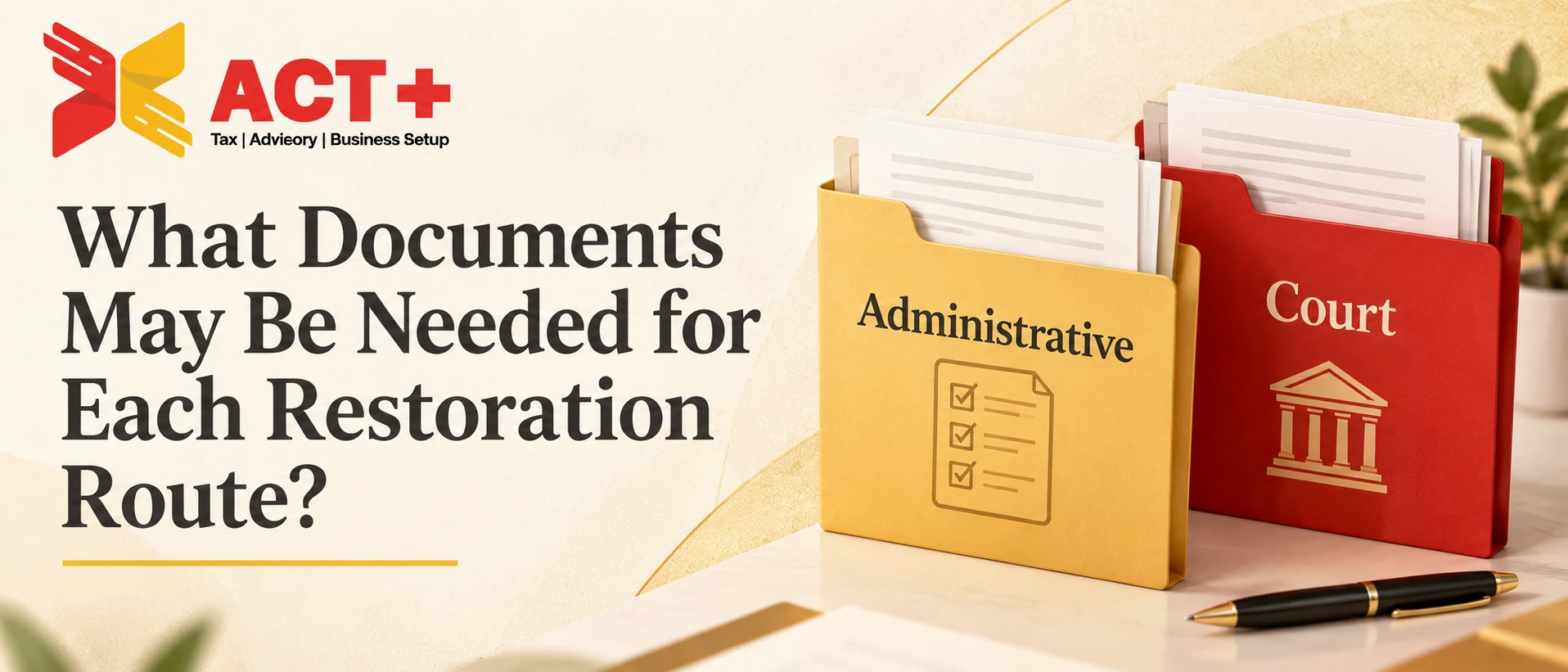
The documents required for company restoration depend on the route, dissolution history, applicant, and outstanding Companies House obligations. Administrative restoration usually focuses on RT01 and compliance records, while court restoration also requires court documents, evidence, and supporting legal information.
Administrative restoration can require RT01, outstanding company filings, official fees, penalties, and Bona Vacantia documentation.
Typical requirements can include:
completed RT01;
overdue annual accounts;
outstanding confirmation statements;
relevant Companies House filing fees;
applicable pre-dissolution late filing penalties;
a Bona Vacantia waiver where required.
Companies House can also request evidence where the company was struck off under particular Registrar powers. The restoration package should therefore follow the company's actual filing and dissolution history.
Court restoration requires a court application and evidence explaining why the company should return to the register.In England and Wales, Form N208 is commonly used. Supporting documents depend on the applicant and reason for restoration.
The case may involve:
evidence of the applicant's interest;
details of the dissolved company;
relevant company filings;
correspondence with Companies House;
documents concerning company assets;
Crown representative correspondence where relevant.
Once the court grants restoration, the order must reach the Registrar before the register can be updated.
Bona Vacantia can affect administrative or court restoration when assets or rights are passed to the Crown after dissolution. Company assets can include bank balances, land, shares, intellectual property, and contractual rights. Administrative restoration can require Crown consent where property or rights become bona vacantia. The applicant may therefore need a Bona Vacantia waiver letter. Court restoration can also involve the relevant Crown representative where company assets are involved. The detailed requirements depend on the asset, jurisdiction, and restoration circumstances. This article only covers the relationship at a high level. The asset rules belong in a dedicated Bona Vacantia guide.
Outstanding Companies House filings can form part of a restoration case, particularly under administrative restoration. The company may need to provide annual accounts, confirmation statements, or other documents needed to update its record. Late filing penalties require a distinction. Accounts already overdue before dissolution can still carry penalties relating to that earlier period.
However, Companies House states that accounts which became due while the company was dissolved do not attract late filing penalties when delivered on restoration. This difference can materially affect the amount payable during restoration. The company record should therefore be checked period by period.
Administrative restoration usually has fewer procedural stages, while court restoration includes court proceedings before Companies House can complete the restoration. Neither route has one guaranteed completion time. Administrative restoration can take longer where filings are incomplete. Bona Vacantia correspondence can also delay the application. Companies House may request further evidence before accepting the restoration. Court restoration depends on the relevant court timetable, document service, evidence, and any hearing requirements. The overall timeframe therefore depends more on the individual case than on a single published number. A complete application generally avoids preventable delays.
Administrative restoration and court restoration involve different official fees, while the total cost depends on the company's circumstances.The current Companies House fee for an RT01 administrative restoration application is £341. Where the standard Bona Vacantia waiver is required, the current waiver fee is £64. Companies House confirms both amounts in its RT01 guidance. Court restoration has separate court fees.
Other costs can arise from:
overdue accounts;
confirmation statements;
filing fees;
existing penalties;
legal assistance;
accountancy work;
professional restoration services.
Official charges can change. Current Companies House and court fees should therefore be checked before submitting an application.
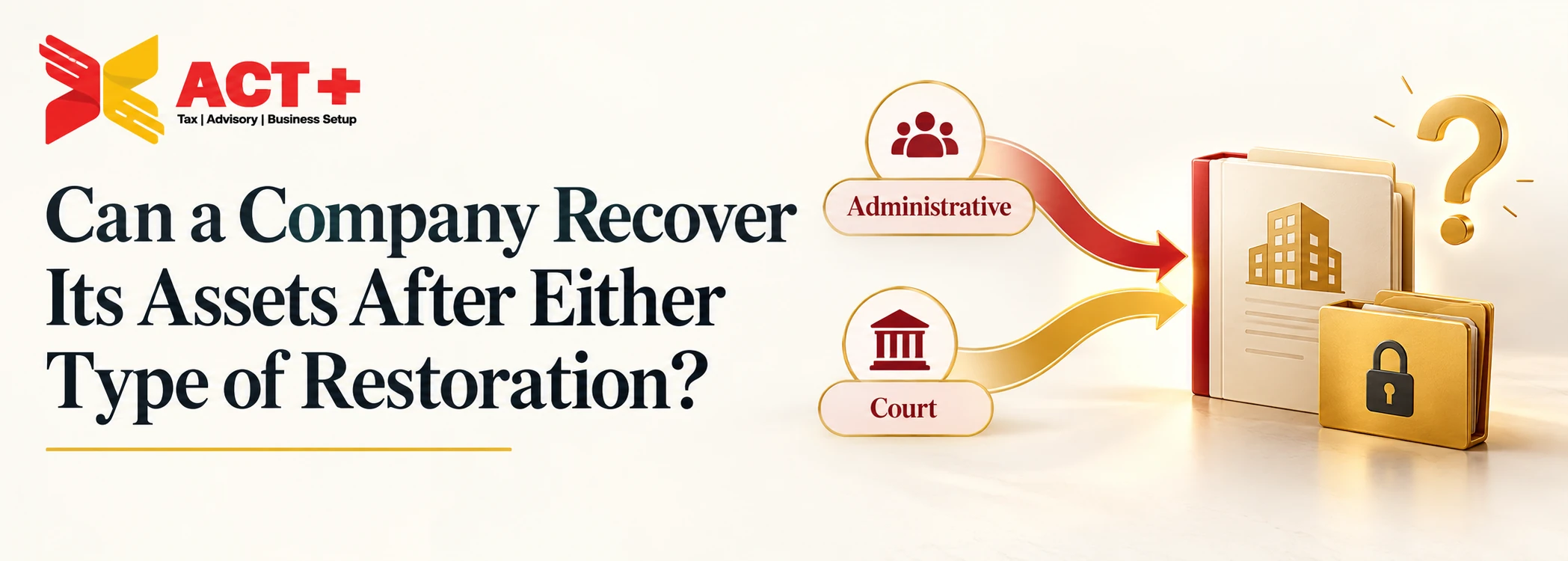
Either restoration route can allow the restored company to deal with assets that remain recoverable after dissolution. Examples include frozen bank balances, property, shares, intellectual property, and money held by payment providers. However, restoration does not guarantee the return of every original asset. A particularly important rule applies where the Crown disposed of an asset while the company was dissolved. Restoration does not undo a disposal that already took place. Section 1034 of the Companies Act 2006 provides instead for the restored company to receive the relevant consideration or value, subject to the statutory rules and allowable costs.
This distinction is important where property was sold during dissolution. Even where an asset remains recoverable, restoration may not provide immediate practical access.A bank or payment provider can require evidence that Companies House has restored the company. Asset recovery therefore has two parts: restoring the company's legal position and recovering practical control of the asset.
Yes. Administrative and court restoration generally return the existing company rather than create a new company. The company's earlier corporate history remains connected with it. Its registered company number also continues to identify the same corporate record. Previous rights and obligations can remain relevant after restoration. The restoration route therefore changes the procedure used to return the company. It does not normally change the underlying corporate identity. This legal continuity can be important for contracts, property, company funds, debts, and historic filings.
The route usually follows the reason for dissolution and the applicant's legal position.
This table provides a starting point only.
Unusual strike-off grounds or legal circumstances can require separate assessment.
Check the dissolution history, applicant status, outstanding filings, and company assets before starting restoration. Begin with the Companies House record. Confirm the dissolution date and reason for strike-off. Identify whether the Registrar removed the company or the directors requested voluntary dissolution. Then establish who will make the application. Review outstanding annual accounts and confirmation statements.
Check whether pre-dissolution penalties remain unpaid. Identify company assets such as cash, property, shares, or intellectual property. A Bona Vacantia issue can affect the supporting documents. Existing creditors, legal claims, and property interests can also change the appropriate route.
Administrative restoration vs court restoration is therefore a question of legal eligibility rather than personal preference. Administrative restoration provides a direct Companies House route for qualifying cases. Court restoration covers voluntary strike-off and a broader range of applicants and circumstances. Choosing the correct route first helps keep the restoration focused on the filings, evidence, fees, and legal steps that actually apply.
No. A dissolved company cannot operate as an active legal company while it remains off the Companies House register. Normal company activity should resume only after restoration is completed. Once restored, the company generally continues under the same corporate identity.
Yes. A restored company may need a different registered name if its previous name is no longer available. The company still keeps its original corporate identity and registration number. The name change does not create a new legal entity.
Yes. A dissolved limited liability partnership can be restored through an administrative or court route, depending on its circumstances. The requirements and forms differ from those used for limited companies. Eligibility depends on how the LLP was removed from the register.
No. Restoration does not erase the company’s earlier Companies House history. The dissolution and restoration remain part of the same corporate record. The company also keeps its registration number, which links its history before dissolution with the restored entity.

Specialists at Xact+ Accountants helping UK directors reinstate struck-off companies, meet Companies House and HMRC obligations, and recover frozen funds.
Speak to a restoration specialist today — most eligible companies are back on the register in 4–6 weeks.
Start restorationSend the basics. A case manager checks the register and comes back with the route, the documents and the official costs.
Start with how the company was dissolved.
These answers help estimate work and official costs.
We use these details only to prepare your email summary.
This is an indication from your answers, not a formal assessment.


Leave a comment